problems
1. persistence: fission
Consider a case of fission:
An amoeba A divides at noon into two qualitatively identical amoebas Am and Ab, which are placed in adjacent petri dishes, each with continuous with causal origins form A.
A
Determine whether each of the following continuations are appropriate descriptions of the fission scenario by the lights of perdurantism and endurantism respectively.
-
Both Am at 1pm and Ab at 1pm are identical to A at 11:45am. What used to be one amoeba A at 11:45am is at 1pm two different amoebas Am and Ab.
-
A at 11:45pm is identical to Am at 1pm but not identical to Ab at 1pm. What used to be one amoeba A at 11:45am continues to be an amoeba at 1pm, even if a numerically different genetically and morphologically identical amoeba came into existence at noon.
-
A at 11:45pm is identical to none of Am or Ab at 1pm. In fact, A ceased to exist as soon as its division took place at noon.
-
A is a part of each Am or Ab.
B
Does the fission scenario provides evidence for one view over the other?
2. four- and three-dimensionalism and common sense
A
Evaluate the following objections to four-dimensionalism:
-
According to four-dimensionalism, I never have all of my parts at a given time. Instead, they are spread out across times. But all of my parts are present now!
-
According to four-dimensionalism, the back, seat, and legs of the chair are strictly not parts of the chair. But that seems absurd!
-
If four-dimensionalism is true, then nothing changes shape. I thought I could change from being sitting at one time to being standing at another time, but what is strictly sitting and strictly standing are temporal parts of mine, which never change shape. But there is change in the world!
B
Evaluate the following objection to three-dimensionalism:
- According to three-dimensionalism, I’m wholly present at every time at which I exist. Either for me to be wholly present at a time is (i) for all of my parts at the time to exist at that time or else it is (ii) for all of my parts (at one time or another) to exist at that time. If (i) is the case, then three-dimensionalism is trivial: even four-dimensionalists agree that all of my present parts presently exist. But if (ii) is what it is for me to be wholly present, then three-dimensionalism is just false: my baby teeth have been part of me (at one time or another) but they do not exist now.
3. the puzzle of coincidence
Consider the following case:
A lump of clay, Lumpl, is created at exactly the same time as a statue, Goliath, is formed from it. They occupy the same space, and are made of the same matter until Goliath is finally crushed at noon and ceases to be a statue. The lump remains for a while until it is finally annhilated.
Are Lumpl and Goliath identical? Consider the following argument:
- Lumpl survived being crushed.
- Goliath did not survive being crushed.
- Therefore, Lumpl and Goliath are not identical.
A
Assess the argument from the point of view of perdurantism?
B
Consider the following modification of the case:
A lump of clay, Lumpl, is created at exactly the same time as a statue, Goliath, is formed from it. They occupy the same space, are made of the same matter, and are eventually simultaneously annihilated at noon.
Consider the following argument:
- Lumpl could survive being crushed at 11:45am.
- Goliath could not survive being crushed at 11:45am.
- Therefore, Lumpl and Goliath are not identical.
Assess the argument from the point of view of perdurantism?
C
How could Lumpl and Goliath be two different material objects if they occupy the same space and are made of the same matter at the same time?
4. time travel revisited
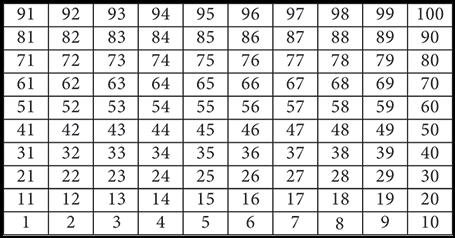
Nikk Effingham and Jon Robson have imagined a time travel scenario in which a brick is taken back in time over and over again making sure that the time travelers are strategically arranged into the form of a wall as in the figure below. You may think of brick \(n\) as the time traveler, which originates from \(n\) days into the future.
A
Consider the following questions:
-
Is this a consistent time travel scenario?
-
How many bricks are involved in the time travel scenario?
-
How many walls are involved in the time travel scenario?
-
How can a single brick make up a wall?
-
How should a perdurantist describe the time travel scenario?
-
How should an endurantist describe the time travel scenario?